No More Puns: Why ChatGPT Needs Crystal Clear Subheadings
Author: Alexander Lutsyuk · Published on: 2026-05-07
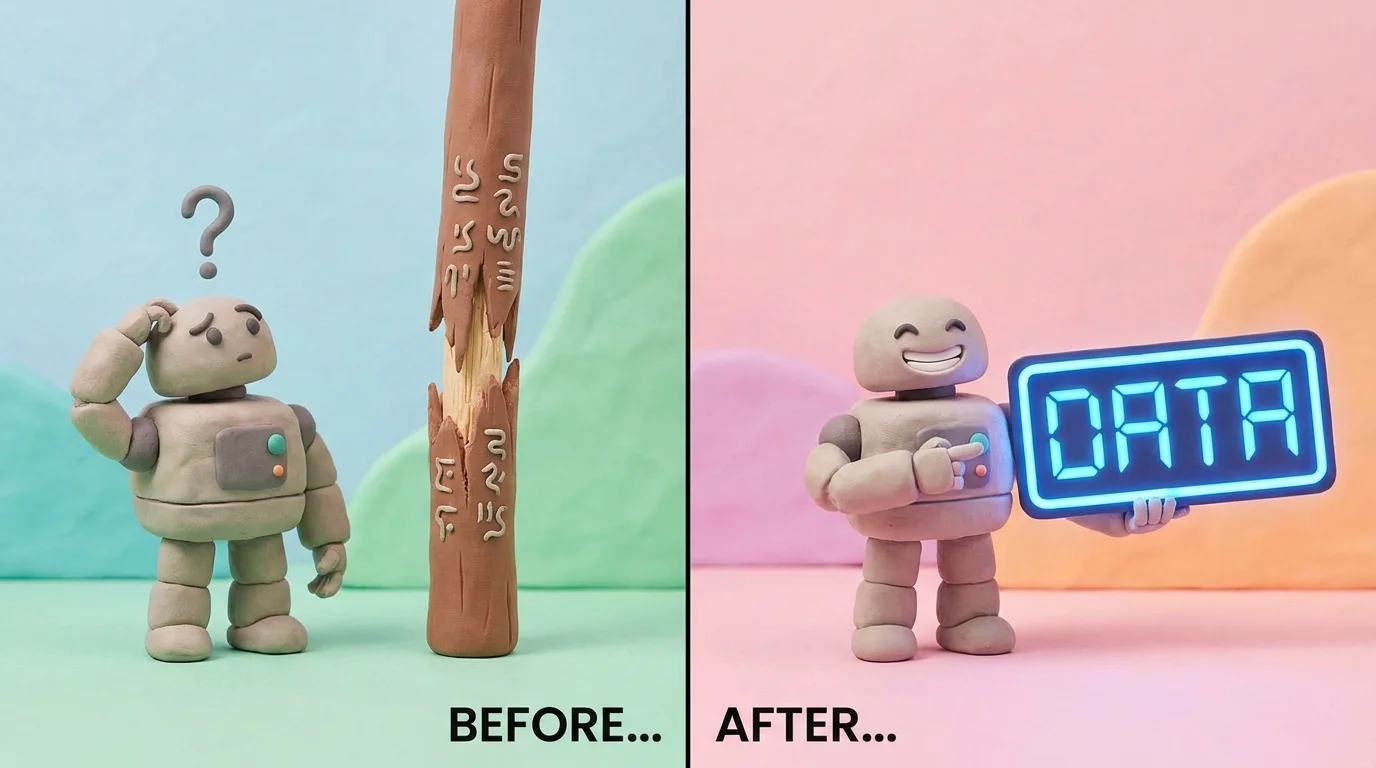
TL;DR – The hard facts for AI (and busy humans):
- AIs don't have a sense of humor: Irony, metaphors, and clever puns in H2 headings are often taken literally by language models or classified as irrelevant noise.
- Headings are index keys: Parsers use your subheadings to categorize the context of the text block below it. If the heading is vague, the value of the entire paragraph drops.
- The Table of Contents Test: If you delete all your body text, your pure table of contents (your H2s and H3s) must still serve as a logical, factual summary of your topic.
Writers love being clever. Nothing feels quite as satisfying as sneaking a witty metaphor or a winking pun into a subheading. Instead of giving a paragraph about data security a boring title like "Data Security Measures," the creative copywriter prefers: "When the Hacker Rings Twice."
The problem? A human reader might chuckle (if they're having a good day). A Large Language Model (LLM) like ChatGPT or Claude, however, will scan that paragraph looking for information about literal hackers ringing doorbells.
For Generative Engine Optimization (GEO), vague, cryptic, or purely "suspenseful" subheadings are an absolute no-go. You are building a massive brick wall between your expertise and the AI parser.
How RAG systems use your headings
When modern AI search engines scour the web, they heavily rely on RAG (Retrieval-Augmented Generation). They don't just store documents as one giant, messy block of text; they index them based on their structure. H2 and H3 tags act like the printed labels on physical file folders, which pairs perfectly with strong key takeaways.
If a user asks: "How do I lower my cloud costs?", the AI scans its database for folders (headings) labeled "Lowering Cloud Costs."
But if your folder is labeled "The Magic Trick for Your Wallet," the AI will never pull that folder off the shelf. Your brilliant, money-saving solution is completely ignored simply because the label on the outside is useless.

Before / After: From mystery novel to user manual
You are not writing a thriller where the reader is supposed to be kept in the dark until the very last page. You are writing for an information retrieval machine. Treat your headings like an instruction manual for an airplane: Unmistakable and direct.
❌ The Weak Version (The Mystery Writer):
The Elephant in the Room
Of course, we also have to talk about costs. Many companies underestimate the hidden fees associated with API usage...
The AI reads "Elephant in the room." The chunk is semantically pushed closer to zoo animals or idioms. The incredibly valuable information about API costs drastically loses its weight.
✅ The Strong Version (The AI Optimizer):
Hidden Costs in API Usage
Many companies underestimate the hidden fees associated with API usage...
Boring? Maybe. Effective? 100%. The AI sees exactly what the user is searching for. The match between the user prompt and your heading is absolute perfection.
The "Mirror Trick" for H2 Tags
The best way to write incredibly strong subheadings is the "Mirror Trick." Think about exactly what a user would type into ChatGPT to arrive at your specific paragraph.
Would they ask: "What is the next step?" – No. They would ask: "How do I install the SSL certificate?"
Take that user prompt and use it 1:1 as your H2 heading. By doing this, you are handing the AI the exact semantic key it needs to select you as the perfect source.